
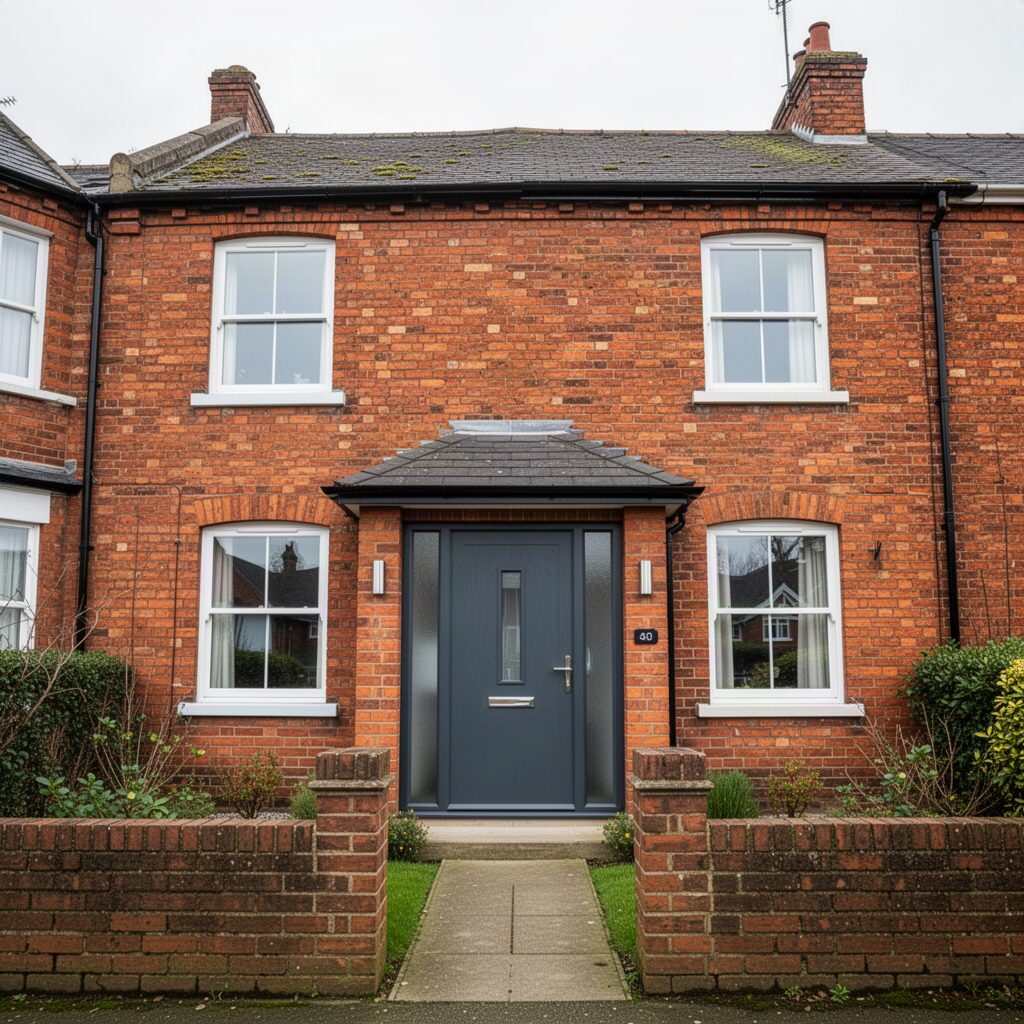
uPVC doors are built from a uPVC frame with a lighter panel infill. Composite doors are thicker, more solid and closer to timber in appearance, and they cost more. uPVC doors are lighter, more affordable and still perform well. Both have a place, and the right answer depends on the door, the property and the customer’s budget.
This guide gives installers a straightforward way to explain the difference and recommend the right door every time.
What Is the Difference Between Composite and uPVC Doors?
A composite door slab combines a GRP skin, which is moulded to give a realistic woodgrain texture, with a solid timber or foam core and a reinforced frame. The result is a thick, heavy slab that feels and sounds like a traditional timber door.
A uPVC door uses a multi chambered uPVC frame, usually steel reinforced, with an insulated panel in the middle. It is lighter and more affordable, and it is easy to match to uPVC windows elsewhere on the house.
Nova supplies both, including composite doors with solid or foam cores and a wide colour range, plus uPVC entrance doors for trade.
Composite vs uPVC Doors: Side by Side
| Composite door | uPVC door | |
|---|---|---|
| Construction | GRP skin over a solid timber or foam core | uPVC frame with insulated panel |
| Feel | Thick, solid, heavy | Lighter |
| Appearance | Realistic woodgrain, many colours | Clean, modern, matches uPVC windows |
| Security | Very strong slab plus multi point locking | Good with steel reinforcement and multi point locking |
| Maintenance | Low | Low |
| Cost | Higher | Lower |
Are Composite Doors Better Than uPVC?
For a main front door, composite usually comes out ahead. The thicker slab gives a more solid feel, better resistance to forced entry and a finish that can pass for painted timber. It is the door most homeowners picture when they say they want something that looks the part.
That does not make uPVC the wrong choice. For back doors, side doors, rentals and budget led jobs, a good uPVC door gives the customer security, insulation and low maintenance at a lower price. Offering both and explaining why builds trust, and it often leads to a composite at the front and uPVC at the back.
“Composite at the front, uPVC at the back is a combination we see all the time. The customer gets the kerb appeal where it counts and keeps the budget sensible everywhere else.”
Scott, Director at Nova Trade Frames
Security: What Actually Matters
Homeowners often hear that composite doors are more secure, and the solid slab does help. But security comes from the whole doorset, not just the material. The locking system, hinges, cylinder and how well the door is fitted all play a part.
For new homes in England, Approved Document Q sets out that external doorsets should be shown by test to meet the security requirements of PAS 24. It applies to new dwellings, but customers replacing a door increasingly ask for the same level of protection. Specifying multi point locking and an anti snap cylinder is a simple way to reassure them, whether they choose composite or uPVC.
Energy Efficiency and Noise
Both door types can deliver good thermal performance when they are made and fitted properly. Composite doors have the edge thanks to their thicker slab and insulated core, which helps keep the hallway warm and reduces draughts and outside noise. uPVC doors with an insulated panel and good seals still perform well, especially on less exposed elevations.
The fit matters as much as the product. A gap in the frame or a poorly adjusted door will undo the benefits of either, so take care setting the door up on handover.
Appearance and Choice
This is where composite doors really sell themselves. GRP skins come in a wide range of styles and colours, from Anthracite Grey and Black to Chartwell Green and Oak, with glazing and hardware choices to match. They suit period homes, new builds and everything in between.
Our online door builder lets you and your customer design a composite door together, choosing the style, colour, glazing and hardware before you order. It is a quick way to help a customer decide and move the job forward.
“Sit down with the customer and design the door with them on the door builder. Once they can see their own door in their own colour, the conversation about price gets a lot easier.”
Scott, Director at Nova Trade Frames
Which Door for Which Customer?
A simple rule of thumb helps you recommend the right door quickly. For a main front door where the homeowner wants a premium look and feel, recommend a composite door. For back, side and utility doors, a uPVC door usually gives the best value. For period and character homes, a composite in a heritage colour sits naturally with older brickwork, and for cottages a stable door can be a great fit. For landlords and budget led jobs, uPVC gives durable, compliant doors at a sensible price, while busy roads and exposed doorways favour composite, thanks to the solid slab and insulated core.
Fitting Tips for Installers
Composite doors are heavier than uPVC, so check the frame and hinges are right for the slab and allow for a two person handling job on larger doorsets. Darker colours on sunny, south facing elevations can expand in hot weather, so set expectations with the customer and make sure the door is adjusted correctly on handover.
If you are swapping a uPVC door for a composite, it is normally best to supply a complete new doorset rather than trying to fit a slab into an existing frame.
Frequently Asked Questions
What lasts longer, composite or uPVC?
Both are long lasting and low maintenance when properly made and fitted. Composite doors are often expected to last longer because of their thicker, tougher construction.
Are composite doors worth the extra money?
For a front door, usually yes. The look, feel and extra solidity are what most customers notice every day.
Is a composite or uPVC door better for a back door?
A uPVC door is often the sensible choice for back and side doors, unless the customer wants the doors to match or the back door is in an exposed position.
Order Composite and uPVC Doors from Nova
Nova Trade Frames manufactures composite and uPVC doors for the trade in Mansfield, with fast lead times, delivery across the UK mainland and support from a team that has been supplying installers for over 40 years. See why installers choose us in our guide to composite doors for trade.
Design a composite door online, open a trade account or contact the team to price your next door.